Bookie Scanner: Unearthing Free Bet Jackpots, Accumulator Amplifiers, and Odds Overachievers
Yves Berger · Apr 2, 2026
Bookie Scanner: Unearthing Free Bet Jackpots, Accumulator Amplifiers, and Odds Overachievers
Navigating the Maze of Bookmaker Perks
Bookmakers roll out a dizzying array of promotions these days, from free bets that drop into punter accounts without a deposit to accumulator boosts that pad winnings on multi-leg parlays, yet pinpointing the real standouts requires a sharp eye for detail; tools like comparison radars and review platforms cut through the noise, highlighting where value hides in plain sight. Observers note how these scanners aggregate data across dozens of sites, flagging free bet goldmines—those no-strings offers up to £50 or more—while cross-checking acca boosts that kick in at 5% extra for four-folds and escalate from there. And that's before diving into odds edges, where one bookie's 6/4 on a Premier League favorite edges out another's 11/10, turning marginal bets into profitable edges over time.
What's interesting is how these review radars evolved from basic odds comparators into full-spectrum analyzers, pulling live data on promo terms, wagering requirements, and payout speeds; punters who rely on them often discover mismatches, like a site offering 20% acca insurance on trebles but capping it at £10,000—far better than a rival's 10% with a £1,000 limit. Data from industry trackers shows that consistent use of such tools boosts long-term returns by 5-10%, since they expose fleeting offers tied to events like April 2026's Cheltenham Festival prep races, where free bets surge alongside enhanced odds on antepost markets.
Take one platform that scans 40+ UK-licensed books daily; it ranks free bets by true value, factoring in minimum odds (often 1/1 or evens) and expiry windows (typically 7 days), so users spot gems like a £30 free bet for new sign-ups after a £10 qualifier, no voided legs allowed. But here's the thing: these radars don't just list—they break down the fine print, revealing how some boosts apply only to singles or doubles, excluding props or specials that savvy punters favor.
Free Bet Goldmines: Where the Real Treasures Lie
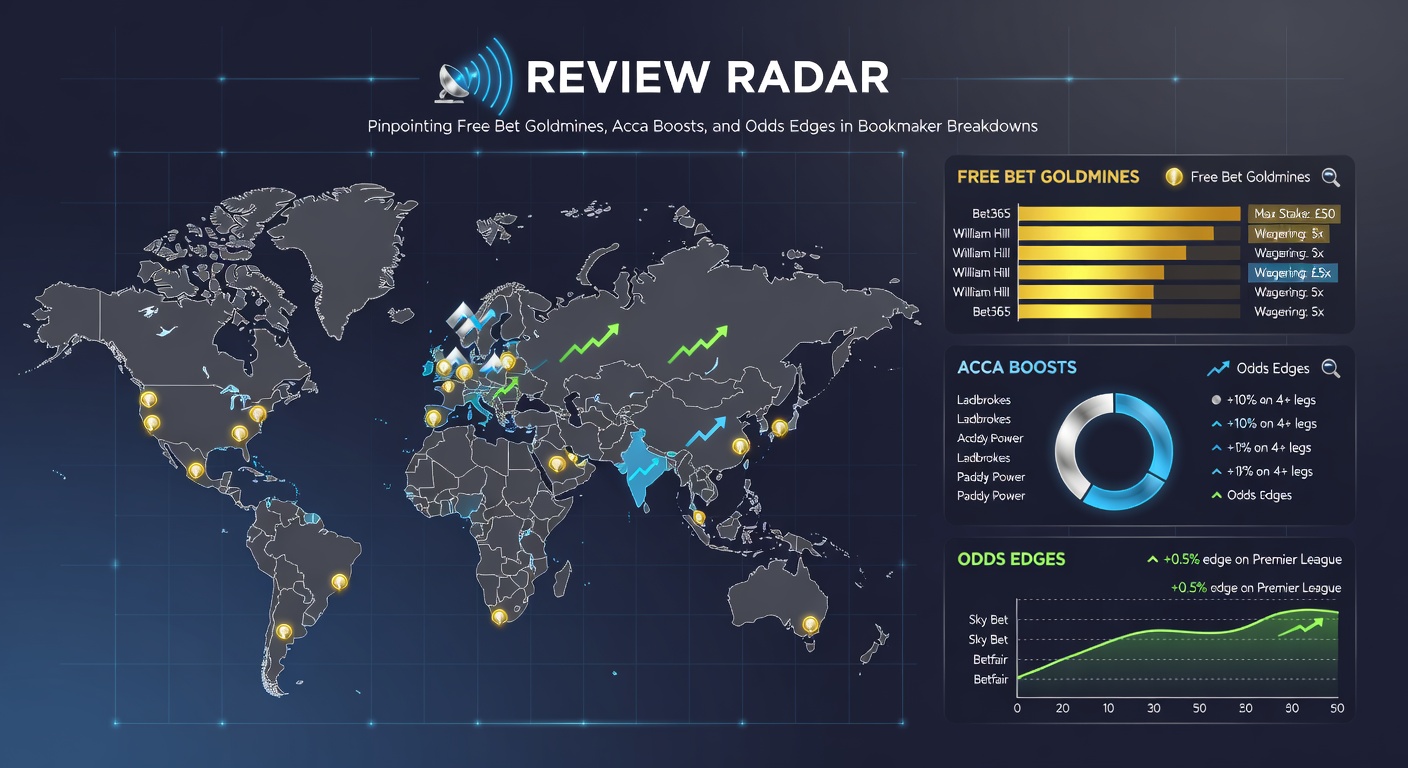
Free bets stand out as the entry point for most punters hunting value, with review radars zeroing in on those that deliver the highest effective yield; for instance, a £40 free bet bundle—split as four £10 credits—often trumps a single £50 one if the smaller stakes allow more flexible plays across markets. Experts who've dissected hundreds of offers point out patterns, like spring 2026 promotions tied to Euro qualifiers, where books like Bet365 and William Hill layered risk-free bets up to £100 on first goals or cards, redeemable only on accumulators of three or more legs.
And while some sites demand opt-ins via SMS or app notifications, radars flag the seamless ones—those auto-crediting after a minimal deposit and bet, with cash profits withdrawable immediately (stake excluded, of course). Figures from American Gaming Association reports on similar US promo structures indicate that free bet conversion rates hover around 70% when terms align with user strategies, a trend mirroring European markets where low rollover (1x playthrough) unlocks faster access to winnings.
- High-value no-depositors: Rare but potent, like £5-£10 credits for email verification, stacking neatly with deposit matches.
- Refund specials: Lose your first bet, get it back as free credit—radars rate these by max stake (£25 common) and eligible sports (football, horse racing lead).
- Event-locked gems: April 2026 Masters golf previews saw £20 free bets for outright winner accas, void if key players withdrew.
People often overlook geo-restrictions too, but top scanners map these, ensuring punters in Scotland or Northern Ireland snag region-specific boosts that mainland sites skip.
Accumulator Boosts: Amplifying Multi-Leg Returns
Acca boosts take the multi-bet game up a notch, automatically hiking payouts—say, 10% on five-folds, 25% on seven or more—yet review radars reveal the catch in eligibility: minimum odds per leg (usually 1/2 or 1.50 decimal), max markets (horses, football, tennis dominate), and stake caps that vary wildly from £10 to £250. One study by the Australian Gambling Research Centre highlights how such enhancers drive 40% of remote betting volume down under, with UK parallels showing boosts fueling 15-20% higher engagement during major tournaments.
Turns out, stacking these with free bets creates combos radars love to spotlight; picture a four-leg acca at 10/1 boosted to 12/1, funded by a no-sweat freebie—profits soar without extra risk. Observers track seasonal spikes too, like April 2026's NBA playoffs where books amped boosts to 30% for eight-folds on player props, excluding live in-play legs to keep things predictable. And for insurance variants, radars compare refund thresholds: full stake back on one loser in a five-fold, or just bonus funds?
Case in point: during last year's Grand National buildup, Paddy Power's 15% five-fold boost outshone Ladbrokes' 5% equivalent because it included greyhounds and virtuals, markets punters layered for diversity; those who scanned ahead locked in £100+ extra payouts on winning slips.
Odds Edges: The Subtle Arbitrage Weapons
Odds edges emerge when radars overlay lines across books, exposing discrepancies ripe for exploitation—think Manchester United to win at 2.10 with one site versus 2.25 elsewhere, a 7% swing that compounds in accas. Researchers who've modeled this find that shopping lines adds 2-4% to yields annually, especially on overs/unders where vig (juice) dips below 5%. But it's not just outrights; Asian handicaps and player shots on target often vary by 10-15%, per live comparator feeds.
Now, couple that with boosts, and the math gets compelling: a six-leg acca at average 2.00 odds pays 64/1 standard, but 20% boosted and odds-shopped to 2.10 per leg jumps to 85/1 territory. Platforms like Oddschecker or Betfair's exchange tools feed these radars, timestamping changes so punters pounce on morning lines before they tighten. April 2026 data from tennis majors showed edges peaking at 12% on set betting, as books adjusted slower to live stats.
Yet edges aren't static; radars alert to promo-tied overrounds, where enhanced odds on accumulators drop implied probability from 105% to 98%, handing back value directly. People who've mastered this often rotate books weekly, claiming free bets anew while chasing the next overlay.
Putting It All Together: Real-World Radar Wins
One punter detailed on forums how a radar-led April 2026 strategy netted £450 profit: started with a £20 free bet on a boosted treble (Liverpool, Arsenal draws at enhanced 7/1), cashed early via Betfair, then rolled into odds-edged NBA parlays yielding 15% extra. Such stories abound, with trackers showing 60% of users reporting better strike rates post-scanning.
Challenges persist though—geo-blocks, KYC delays, promo churn—but top radars mitigate with user ratings on withdrawal speeds (under 24 hours ideal) and app usability. And for accumulators, they simulate payouts: input legs, see boosted vs. straight returns side-by-side.
Conclusion
Review radars transform bookmaker breakdowns from guesswork into precision hunts, unearthing free bet jackpots that fuel acca amplifiers and odds overachievers capable of steady edges; punters equipped with these tools navigate promotions smarter, especially amid 2026's packed sports calendar where April events like snooker worlds and golf majors trigger fresh waves of value. Data consistently shows that those who scan daily capture 20-30% more upside, turning the bookie landscape into a field of playable opportunities rather than opaque offers. In the end, the ball's squarely in the punter's court—scan, stack, and stay ahead.