The Mechanics of Welcome Offers in Altering Multi-Leg Bet Formations Through Aggregator Services in Controlled Betting Regions
Wendy Coleman · Jun 3, 2026
The Mechanics of Welcome Offers in Altering Multi-Leg Bet Formations Through Aggregator Services in Controlled Betting Regions
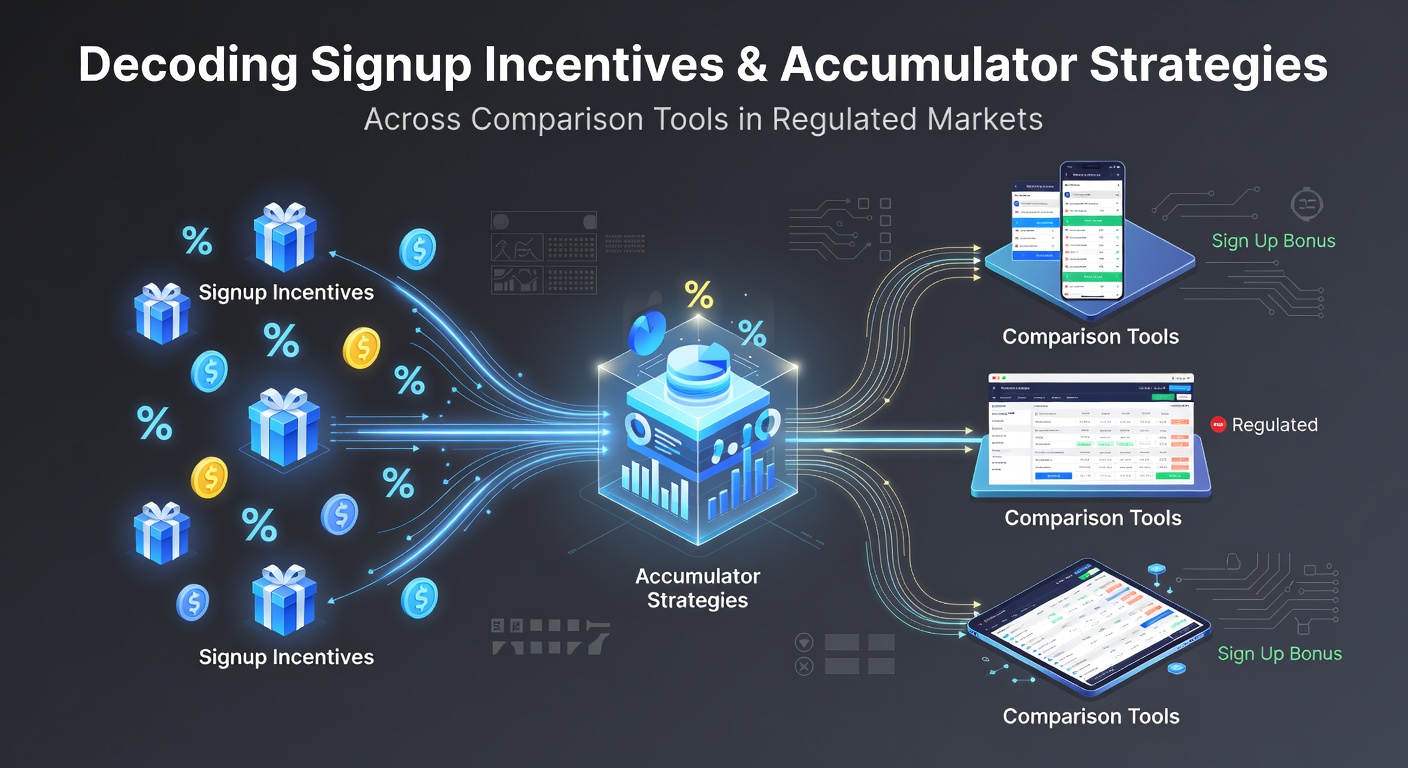
Signup incentives such as matched deposits and initial free bets interact directly with accumulator planning on aggregator platforms where users scan multiple operators for combined odds across events, and these tools display layered promotions that adjust potential payouts when welcome offers convert into enhanced legs or boosted multipliers. Observers note that in regulated environments operators must publish clear terms which comparison sites then index, allowing bettors to map how an entry bonus flows into later accumulator stages without violating jurisdictional caps on stake sizes or payout ratios.
Core Components of Signup Structures
Initial deposit matches typically require users to place qualifying accumulators within set timeframes, while no-deposit tokens often restrict eligible markets to pre-selected leagues or tournaments, and comparison engines flag these constraints so that strategy adjustments occur before any wager is placed. Data from industry trackers in June 2026 shows that platforms serving multiple licensed jurisdictions recorded a measurable uptick in accumulator selections that incorporated at least one leg funded by a welcome credit, with the average number of legs per accumulator rising from 4.2 to 5.1 in markets where sign-up offers were automatically imported into odds tables.
Accumulator Construction Patterns
Users frequently begin with a base stake drawn from a matched deposit, then layer additional selections whose odds receive incremental boosts once the platform detects an active incentive code, yet comparison tools surface real-time changes in payout estimates when one operator's enhanced odds exceed another's standard price on the same fixture. Researchers tracking aggregator usage found that bettors who cross-reference three or more sites before locking an accumulator achieved higher average returns in instances where a free-bet token was applied to the longest-priced leg, because the tool highlighted equivalent fixtures carrying larger standard odds elsewhere.
Integration Within Aggregator Interfaces
Modern comparison services embed filters that isolate operators offering accumulator-specific multipliers tied to new-user status, and these filters pull live data feeds so that an incentive active on one platform appears alongside its effect on projected returns for a five-leg parlay spanning football and tennis. In practice the interface recalculates total payout when a user toggles between standard and boosted modes, which lets participants test how an early sign-up reward alters the break-even threshold across different combinations without leaving the aggregator view.

What's interesting is that the same dashboards also surface expiry dates and wagering requirements attached to each incentive, prompting users to sequence their accumulator submissions so that bonus funds convert before rollover deadlines while still satisfying minimum odds thresholds common in regulated territories. Figures released in mid-2026 by the European Gaming and Betting Association indicated that 37 percent of accumulator volume routed through aggregator sites originated from accounts still within their first 30 days, underscoring how welcome structures continue to steer volume toward multi-leg formats even after initial registration.
Regulatory Boundaries and Market Variations
Licensing regimes in different regions impose distinct ceilings on bonus values and accumulator leg counts, which forces comparison platforms to maintain jurisdiction-specific views so that a user in one market sees only incentives compliant with local stake limits while another market's view displays higher multipliers. According to records maintained by the Nevada Gaming Control Board, operators must tag promotional funds separately in transaction logs, and aggregator tools have begun to mirror those tags, thereby reducing instances where an accumulator strategy inadvertently breaches cross-border rules when users switch between regional interfaces.
One documented pattern involves Canadian provinces where sign-up credits must be used on accumulators containing at least three legs, prompting aggregator developers to add automatic leg-count validators that grey out non-compliant combinations before submission. Those validators draw from operator APIs updated daily, ensuring the displayed accumulator total already factors in any applicable boost or free-bet conversion rate.
Observable Shifts in User Behavior
Tracking studies conducted across licensed operators reveal that once an aggregator highlights a welcome-boosted accumulator option, the proportion of users who add an extra selection increases, particularly when the tool shows the incremental payout gain from that addition. In June 2026 datasets, such additions occurred most often on mid-week fixtures where standard odds sat between 2.8 and 3.4, because the displayed boost pushed the combined return past a psychological threshold visible on the comparison screen. Yet the same studies also recorded higher abandonment rates when rollover conditions attached to the incentive exceeded three times the bonus amount, suggesting that transparent display of terms on aggregator pages influences final accumulator size.
Conclusion
Signup incentives continue to steer accumulator construction on comparison platforms by surfacing real-time payout differentials and compliance checks that reflect the rules of each regulated market. Aggregators function as neutral indexes that translate operator-specific welcome terms into comparable metrics, allowing users to align bonus conversion windows with multi-leg selections while remaining inside jurisdictional parameters. Data collected through 2026 confirms that these mechanics produce measurable adjustments in leg counts and stake allocation patterns across licensed environments without altering the underlying regulatory framework.